From a German visionary in 1920s New York to a quiet studio on a Greek island — the quiet revolution of mindful movement.
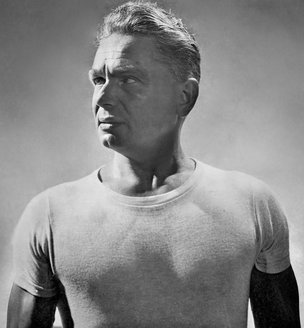
Joseph Pilates was born in Mönchengladbach, Germany, in 1883, a sickly child who suffered from rickets, asthma, and rheumatic fever. Rather than accept weakness, he became obsessed with understanding the body — studying yoga, martial arts, gymnastics, and ancient Greek and Roman movement practices. He believed that physical and mental health were inseparable, and that the mind could heal the body through conscious, controlled movement.
He called his system "Contrology" — the idea that the mind controls the muscles, and that proper breathing paired with precise, flowing movements could restore harmony to the body. It was radical, quiet and most importantly, it worked.
Joseph Pilates is born in Germany, a weak and sickly child. Rather than give up, he dedicates his life to physical self-improvement.
Pilates moves to England to pursue boxing and circus performance. The First World War interrupts, and he is interned as a German national, where he begins teaching his method to fellow prisoners.
Joseph Pilates opens his first studio in Manhattan, calling it "Pilates Studio." The method spreads among dancers, who recognize that his work improves technique, prevents injury, and builds strength without bulk. It becomes their secret.
Joseph Pilates dies, but his method lives on through his disciples. Without marketing, without social media, without the machinery of modern wellness, Pilates quietly spreads through small studios, private teachers, and word of mouth — exactly as it should.
One hundred years later, Pilates is more relevant than ever — not as a trend, but as a deeper understanding of how bodies work, how breath moves, and how the mind and body are never separate.
Multiple articles indicate that Joseph Pilates claimed Greek origin, as mentioned in his Wikipedia article as well as many biographies on the web, articles and even videos on the Web.
The name Pilates itself is surprisingly similar to a Greek name, Piladis or Πιλάδης in Greek. From his biography, we know that Joseph Pilates was a circus performer at some point in his life, when his act was based on an ancient Greek statue. We also know he admired ancient Greeks, who had achieved a perfect harmony between the body, mind and spirit. In fact, it is mentioned that the contrology system was based on this harmony and Joseph Pilates himself frequently referenced Ancient Greece as an important model of physical education.
But was Joseph Pilates indeed Greek, or was he fascinated with Ancient Greece, which somehow became his claimed ancestry throughout the years?
And if he was indeed Greek, who had come over from Greece?
We have tried to decipher this riddle, using publicly available birth, marriage and death certificates.
Joseph Hubertus Pilates was born in Mönchengladbach, near Düsseldorf, on 9th December 1883. His parents were Heinrich Friedrich Pilates and Anna Hahn, both born in the same area. Based on the family names, it's his father's line we need to focus on.
Heinrich Friedrich Pilates (father of Joseph Pilates) was born in April 1859, also in Mönchengladbach, to Friedrich Pilates and Elisabeth Hönings. So far, the entire genealogical tree of the Pilates family was born, raised and died in the same area of Mönchengladbach, without any indication of Greek heritage.
Information about Friedrich Pilates (grandfather of Joseph Pilates) is fuzzy. Records indicate he was born around 1828, but his birth certificate does not list a father, meaning he was likely an illegitimate child, born out of wedlock. Information about his mother, Catharina Adelheid Pilates (great-grandmother of Joseph Pilates), is also patchy. She was born in June 1791 and was herself the illegitimate child of an Eva Renners. Eva Renners married Heinrich Pilates in 1798, after which the Pilates name (Plates in the official records) was transferred to her, replacing her birth surname, Renners. Heinrich Pilates died in 1800. He was not the great-grandfather of Joseph Pilates, but the stepfather of his grandfather.
Adelheid gave birth to another illegitimate child in 1815, Friedrich, mentioned above and gave him her adopted surname, Pilates. His birth certificate does not record his father's name, so this is where our study concludes. But it is interesting that the Pilates name came from Heinrich Pilates, who passed it on to his wife, Adelheid Renners, who then became Adelheid Pilates and passed the Pilates name on to Friedrich Pilates, who continued the Pilates legacy. Adelheid Pilates remarried a Friedrich Zwicker later, and it is unknown why she kept the Pilates surname and didn't adopt her new husband's surname. She died a widow in 1838.
So, we can conclude that Joseph Pilates had no Greek ancestry, unless Friedrich's father was of Greek origin, but more than 200 years later, there is no way we can know — and it is unlikely that Joseph Pilates was using this as his basis for claiming Greek heritage.
Wherever he was from and whatever his ancestry was, Joseph Pilates was one of the most influential movement teachers in history, and his method has helped millions of people around the world move better, feel better, and live better.
Joseph Pilates distilled his method into six fundamental principles — ideas so elegant and useful that they remain the foundation of the practice today. They are not about looking a certain way. They are about moving with intention.
The breath is the heartbeat of the method. Every movement is paired with conscious breathing — inhale to prepare, exhale to move. This oxygenates the body and calms the mind.
All movement radiates from the core — your power house. This isn't about six-pack abs. It's about a stable center from which every limb can move with ease and control.
Every movement is deliberate. You are not going through the motions — you are thinking them, feeling them, controlling them. This is where the method's power lies.
Movement flows like water. There are no jerky, isolated movements — everything connects. You develop a quality of movement that feels good, looks effortless, and protects your joints.
Your body is designed to work in harmony. When you move with proper alignment, you distribute effort evenly, prevent injury, and feel stronger. Poor alignment exhausts you.
You must be present. Pilates is meditation in motion. The more attention you bring to your movement, the more you awaken your body, and the more profound the work becomes.
If your spine is inflexibly stiff at 30, you are old. If it is completely flexible at 60, you are young.— Joseph Pilates
In a world obsessed with speed, intensity, and visible results, Pilates asks you to slow down. It asks you to pay attention. It asks you to listen to your body instead of punishing it. This is radical.
The research is clear: regular Pilates improves posture, reduces back pain, increases flexibility, builds lean muscle, improves balance, enhances proprioception (body awareness), and calms the nervous system. But these are just side effects. The real gift is the relationship you develop with your own body — the sense that you are home in it, that it is intelligent and capable, and that you know how to listen.
At Kea Pilates & Massage, we do not teach Pilates as a trend or a fitness solution. We teach it as Joseph intended — as a practice of presence, a conversation between mind and body, a slow and patient uncovering of strength and ease. We honour the lineage by honouring the person in front of us: by listening, by adjusting, by never pushing beyond what the body is ready to give. This is the real inheritance of Pilates — not the exercises, but the philosophy. Not the reputation, but the quiet work.